ServicesHardwood Flooring
Hardwood Flooring in Richmond, TX
Hardwood is a big decision, and the choices can feel confusing. We explain what solid and engineered wood really mean, check what is under your current floor, and install hardwood that suits your home and the way your family uses it.
What Hardwood Means for Your Home
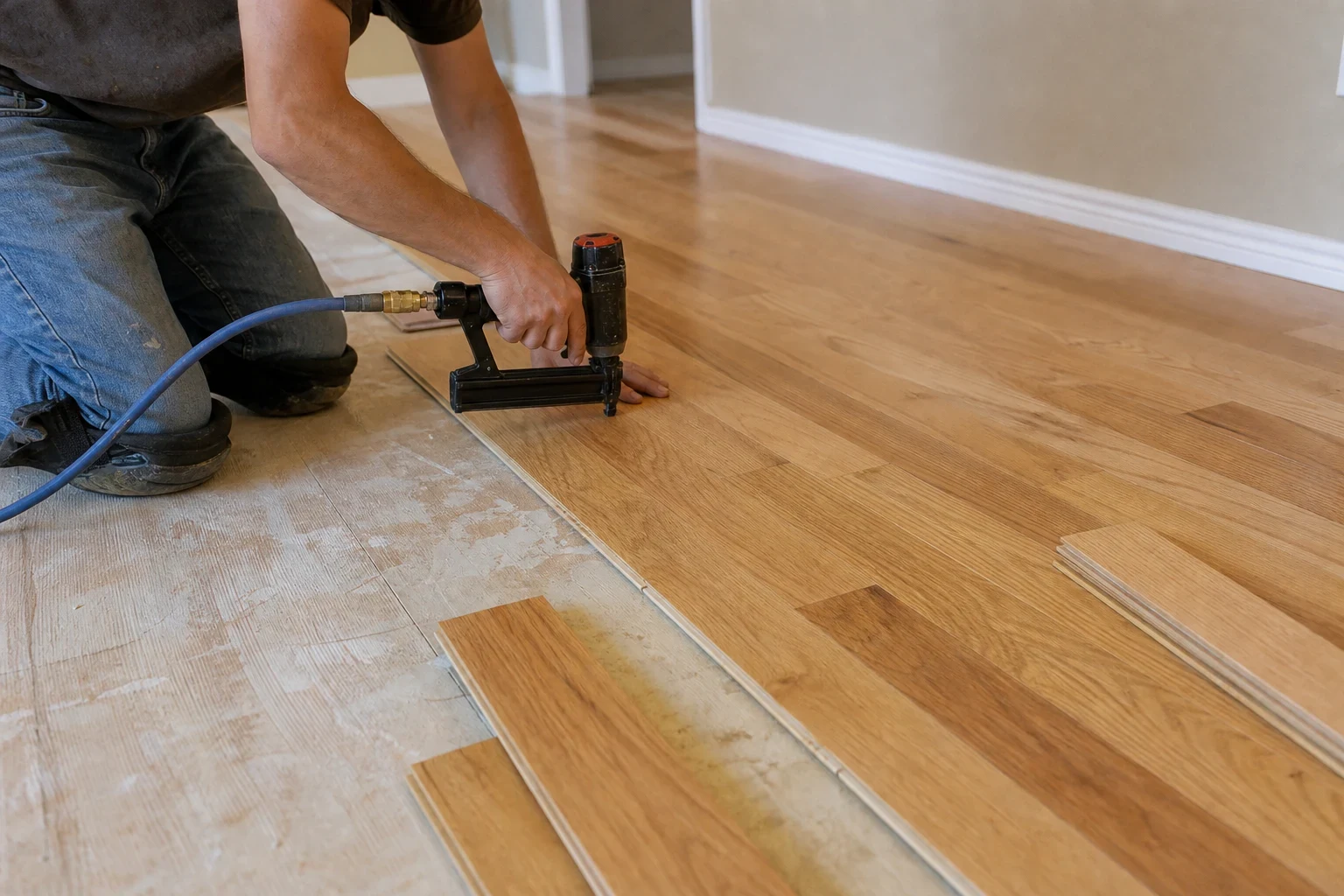
There are two kinds of hardwood, and the difference matters more than the species or color. Solid hardwood is one piece of wood, top to bottom. Engineered hardwood has a real wood top layer bonded to a stable core of plywood or similar layers. Both look and feel like wood because both are wood on the surface.
Most houses around here sit on concrete slabs, and the Gulf Coast air stays humid much of the year. Solid wood moves with moisture, so it usually needs a wood subfloor to be nailed into. Engineered wood handles humidity better and can be glued down or floated over a slab, which is why we recommend it in most ground-floor rooms.
We have been installing floors for more than 25 years, and we would rather spend ten extra minutes going over your options than have you pick a floor that fights your house.
What Our Hardwood Installation Includes
A plain look at your options
We bring samples and explain wear layer thickness, plank width, finish sheen and species hardness in everyday terms. You will know what each choice changes before you pay for it.
Moisture testing on concrete
Before any wood goes over a slab, we test the concrete for moisture. If the reading is high, we tell you and show you the vapor barrier or adhesive system that addresses it.
Removal of the old floor
We pull up existing carpet, tile or vinyl and haul it away. Tile removal takes longer and creates more dust, so we plan for it and tell you up front.
Subfloor leveling and prep
Hardwood shows every dip underneath it. We grind high spots and fill low ones so planks sit flat and do not flex or click when you walk.
Installation, trim and transitions
We install the floor, then fit baseboard or quarter round and the transition strips where hardwood meets tile or carpet. Doors are checked so they still swing cleanly.
Cleanup and a walk-through
We vacuum, clear the debris and walk the finished floor with you. We also go over simple care, like which cleaners are safe and how to protect against furniture scratches.
Signs It Is Time for New Hardwood
Boards are cupping or crowning
When plank edges rise above the center, or the center bulges up, moisture has gotten into the wood. Often the floor was installed without the right barrier over the slab.
Gaps that never close
Small seasonal gaps are normal. Wide gaps that stay open year-round usually mean the boards have shrunk or loosened beyond what the floor can recover from.
Soft or hollow spots
A floor that sounds hollow or sinks slightly underfoot may have failed adhesive or a damaged subfloor. That needs a look underneath, not just a new surface.
Wear through the top layer
On older engineered floors, the thin wood layer can wear down to the core. Once that happens, replacement is the honest answer.
You are tired of carpet
Many people come to us simply wanting something easier to clean and better for allergies. That is a perfectly good reason to switch.
How a Hardwood Job Goes
- 1
A conversation by phone
You tell us about the rooms, your current floors and what you are hoping for. We go over the basic choices and set a time to see your home.
- 2
Measuring and testing
We measure each room, check the subfloor for level and test any concrete for moisture. Then we walk you through what we found and what it means for your choice of wood.
- 3
Letting the wood settle
Hardwood needs time in your home before it goes down so it adjusts to your indoor humidity. We tell you how many days your product needs and why.
- 4
Install day
We protect walkways, remove the old floor, prep the subfloor and lay the new wood. Most rooms are done in a day or two, and we let you know each evening where things stand.
- 5
Finish and follow-up
After trim and cleanup, we walk the floor together. Our installations carry a 1-year workmanship warranty, so if something we did is not right, we come back and fix it.
What Moves the Cost of Hardwood
Hardwood pricing depends on more than the price on the box. We go through each part of the estimate with you so you know what you are paying for and why. Here is what tends to change the total most.
- Solid or engineered, and the species
- Thicker wear layers, wider planks and harder or rarer species cost more. We point out which upgrades you will notice in daily life and which you will not.
- What comes up first
- Removing carpet is quick. Breaking up ceramic tile set in mortar takes much more labor and disposal.
- The condition of the subfloor
- An uneven slab or damaged plywood needs leveling or repair before wood goes down. We show you what we find so the extra work makes sense.
- Layout and extras
- Rooms with many corners, angled walls or stairs take longer. If you want stairs to match, our stair flooring work is quoted alongside the floor.
Hardwood Questions We Hear Often
Something not covered here? (346) 480-5524
Can hardwood go over a concrete slab?
Yes, usually engineered hardwood. It can be glued directly to the slab or floated over an underlayment with a moisture barrier. Solid hardwood typically needs a wood subfloor, which adds height and cost, so we rarely recommend it on a slab.
Is hardwood a good idea in a kitchen?
It can be, as long as you wipe up spills quickly and keep a mat at the sink. Wood does not like standing water. If your kitchen sees a lot of splashing, we may suggest luxury vinyl plank or tile flooring there and walk you through the tradeoffs.
What is a wear layer, and how thick should it be?
The wear layer is the real wood on top of an engineered plank. A thicker layer lasts longer and hides scratches better. We show you samples side by side so you can feel the difference before deciding.
Will my house be torn up for weeks?
No. Most jobs take a few days of work after the wood has adjusted to your home. We keep the work to the rooms involved, cover the paths we use and clean up at the end of each day.
What if something goes wrong after you finish?
Every installation comes with a 1-year workmanship warranty, and we carry insurance while we work in your home. If a board lifts or a transition loosens because of our installation, call us and we will make it right.
Ready to Talk Hardwood?
Tell us about your rooms and we will explain your options in plain terms. We work in Richmond and nearby towns like Sugar Land, Rosenberg and Fulshear.