ServicesTile Flooring
Tile Flooring in Richmond, TX
Tile lasts for decades when the floor underneath is ready for it. We check your slab, walk you through porcelain versus ceramic, grout types and layout in plain terms, then set the tile flat, level and with the movement joints it needs.
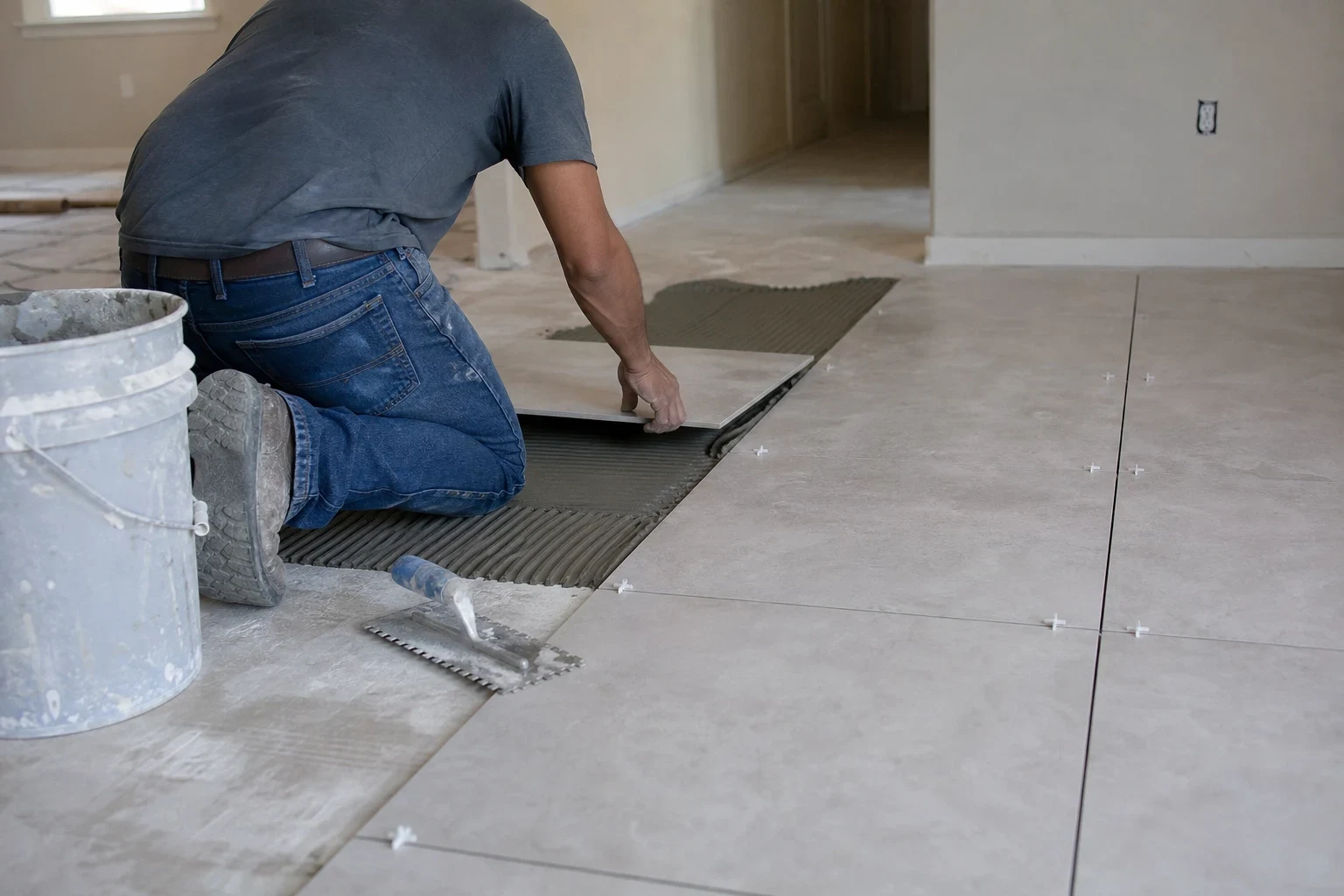
What Tile Is Good At, and When It Fits
Tile is a hard, fired surface that shrugs off water, pets and heavy traffic. That makes it a natural pick for kitchens, bathrooms, laundry rooms and entryways. It also stays cool underfoot, which many people appreciate through a long Texas summer.
The tradeoff is that tile does not flex. If the floor beneath it moves or dips, the tile or grout will crack. Most homes around Richmond sit on concrete slabs over clay soil that swells and shrinks with the seasons, so hairline slab cracks are common. Good tile work starts by dealing with those, not covering them up.
We have been in business 25+ years, and the most useful thing we do on a tile job is explain what we see. You will know what your slab needs, what each tile and grout option means, and why we recommend one over another.
What Your Tile Installation Includes
- 01
Removing the old floor
We pull up carpet, vinyl, laminate or old tile and haul it away. Breaking out old tile is loud and dusty, so we seal off doorways and cover vents before we start.
- 02
Slab check and repair
We look for cracks, high spots and low spots, and show you what we find. Cracks get a crack isolation membrane so slab movement is less likely to reach the tile, and dips get leveled.
- 03
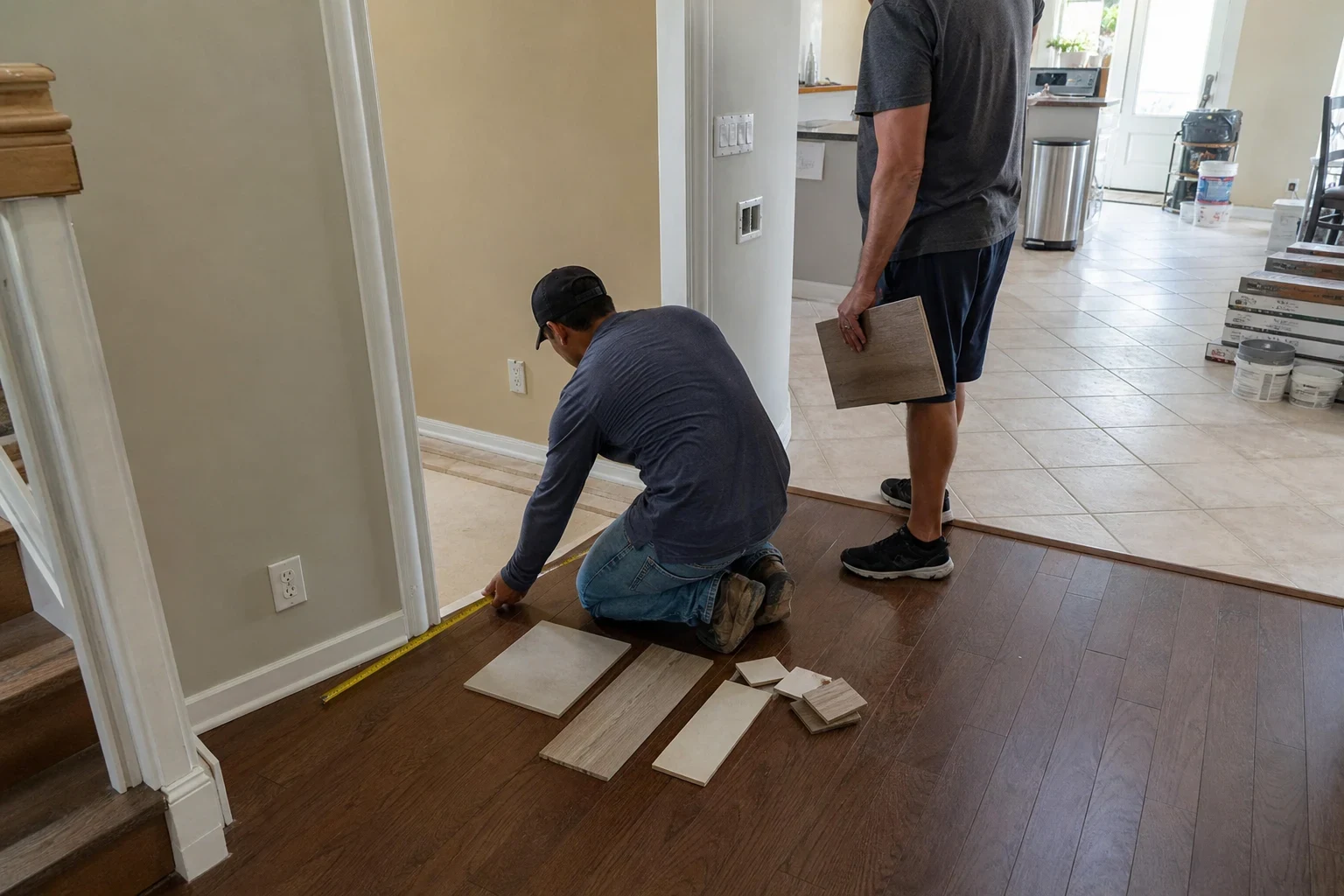
Layout planned with you
We dry-lay tile to find the starting line so you do not end up with thin slivers at a doorway or along a wall. Patterns like straight, offset or herringbone are talked through before any thinset goes down.
- 04
Setting and leveling
Tile is set in the right thinset for its size, with full coverage on the back. On large-format tile we use leveling clips to keep edges flush, since big tiles show uneven edges more than small ones.
- 05
Grout, joints and trim
We grout, leave flexible movement joints at walls and in larger rooms, and finish transitions to neighboring floors. Then we clean up and walk the floor with you.
Questions about Tile Flooring?
Call(346) 480-5524Signs Your Floor May Be Ready for Tile
Water keeps reaching the floor
Swollen laminate by the dishwasher or curling vinyl by the tub tells you the room needs a surface that does not mind getting wet. Porcelain tile is about as water-resistant as flooring gets.
Cracked or hollow-sounding tile
Old tile that clicks when tapped or has cracks running across several pieces has usually lost its bond. Replacing a few tiles rarely fixes it, because the cause is underneath.
Grout that keeps crumbling
Grout that washes out or cracks along the same lines often points to movement in the floor. A new install with proper prep and joints addresses the reason.
Pets and heavy traffic
Scratched floors in a busy entry or a dog's favorite path are a good reason to consider tile. A higher-rated porcelain holds up to claws and grit.
Carpet in the wrong rooms
Carpet in a kitchen, bath or breakfast area traps spills and smells. Tile there is easier to keep clean, and it pairs well with carpet installation in bedrooms if you want softness elsewhere.
How a Tile Job Runs, Step by Step
- 1
A conversation by phone
We talk about which rooms you want tiled, the flooring there today and how your family uses the space. We explain the main tile choices so you can start narrowing things down.
- 2
Measuring and looking at the slab
We measure, check how flat the floor is and note any cracks or moisture. You get a clear written estimate that lists removal, prep, materials and labor separately.
- 3
Prep day
Furniture is moved out of the work area, old flooring comes up, and the slab is repaired, leveled and covered with membrane where needed. Prep is the part you do not see later, and it decides how long the tile lasts.
- 4
Setting and grouting
Tile goes down over one or more days depending on size and pattern. The thinset needs time to cure before grout, so plan on keeping foot traffic off for about a day after setting.
- 5
Walkthrough and cleanup
We clean the grout haze, vacuum the dust and walk the floor with you. We also explain how to care for your grout so it stays looking new.
What Moves the Cost of Tile Flooring
Tile pricing has more moving parts than most floors, which is why we list them out on your estimate. The tile itself is only one piece. Removal, slab prep and the size of the tile often matter just as much.
- Tile size and type
- Porcelain is denser and harder to cut than ceramic. Large-format tiles need flatter floors, more thinset and more careful handling, which adds labor.
- What comes up first
- Pulling carpet is quick. Breaking out old tile set in a mortar bed takes much longer and creates more debris to haul away.
- Slab condition
- A flat slab with no cracks keeps prep simple. Leveling dips and adding crack isolation membrane add materials and time, but they protect the finished floor.
- Pattern and room shape
- Straight lay in an open rectangle is the most efficient. Herringbone, diagonals and rooms with many corners, cabinets or doorways mean more cuts.
- Grout choice
- Standard cement grout costs less. Urethane or epoxy grout costs more but resists stains and does not need sealing, which many families find worth it in kitchens.
Tile Flooring Questions We Hear Most
What is the difference between porcelain and ceramic tile?
Both are fired clay, but porcelain is made from finer clay fired hotter, so it is denser and absorbs very little water. Ceramic is softer, easier to cut and usually costs less. For kitchens, baths and busy areas we usually suggest porcelain, while ceramic works fine on walls and lighter-use rooms.
My slab has a crack. Can you still put tile over it?
Usually, yes. Small, stable cracks are common on slabs in this area. We cover them with a crack isolation membrane that lets the slab move slightly without passing that movement to the tile. If a crack is wide or uneven across its edges, we will tell you plainly and suggest having it looked at first.
Can tile go upstairs over a wood subfloor?
It can, but the floor has to be stiff enough. Wood floors flex more than concrete, and flex cracks grout. We check the framing and subfloor and add an underlayment if needed. If tile is not a good match for that room, we will say so and talk about options like luxury vinyl tile.
How long until we can walk on the new floor?
Light foot traffic is usually fine about a day after grouting. Furniture and appliances should wait a little longer so the grout can firm up. We give you exact timing for your materials before we leave.
Is your tile work covered after it is done?
Yes. We offer a 1-year workmanship warranty on all installations, and we are insured while we work in your home. If something related to our installation is not right, call us and we will come look at it.
Ready to Talk Through Your Tile Floor?
Give us a quick picture of the space you want tiled and how it gets used day to day. We will walk you through porcelain, ceramic and grout choices in everyday language and lay out what the work involves.